
National Black Estheticians’ Week is not confined to a single week. It is an ongoing practice of visibility, education, and infrastructure-building within our industry.
Across this platform, we highlight Estheticians who are not only serving clients, but shaping the future of esthetics. Educators. Mentors. Leaders. Estheticians building standards that will outlive trends.
Tierra Holley is one of those leaders.
Her journey from treatment room to classroom reflects a broader movement —Estheticians claiming ownership of education, strengthening clinical excellence, and expanding access to Skin of Color training.
Below is our conversation with Tierra, presented in her own words.
An Interview with Tierra Holley
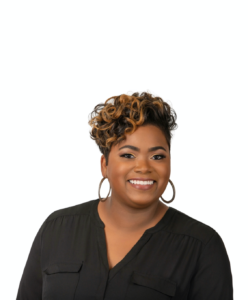
Please share your full name, business name, and where you currently practice.
Tierra Holley, Ascend Beauty College, Huntsville, AL
How long have you been a licensed Esthetician, and where are you originally from?
I’ve specialized in Esthetics for the past 7 years. I started with make up in my teens. I became a licensed cosmetologist in 2013 and opened my spa in 2019.
You recently transitioned your spa into more of a learning and education space. What inspired that shift?What inspired me to turn my spa into a school was really a desire to elevate what I was seeing in the industry. As a spa owner, I noticed that many new Estheticians were very comfortable performing basic facials, but not always confident stepping into advanced modalities or conducting in-depth facial analysis independently. I saw potential — they just needed stronger hands-on reinforcement and real-world confidence building. At the same time, after more than 10 years working primarily as a hairstylist and nail tech, I noticed how committed clients were to hair and nail maintenance. Yet skincare was often treated as optional. Very few wore sunscreen consistently, and facials were seen as occasional luxuries instead of part of a regular regimen. That observation didn’t discourage me — it challenged me. I wanted to help shift the standard. Not just train Estheticians to complete services, but to truly understand skin, educate confidently, and position skincare as essential self-care. Turning my spa into a school felt like the natural next step to create that kind of impact — from the treatment room to the classroom.
You’ve shared your passion for Skin of Color education. Why is this work so important to you, and what gaps do you feel still exist in the industry?
We’ve all heard the phrase, “Black don’t crack.” While it’s often meant as a compliment, it has unintentionally created the myth that women and men of color don’t need to prioritize skincare. It’s true that higher levels of melanin offer some natural UV protection and can delay visible signs of aging. However, melanin is protective — not preventative. Skin of color is more prone to concerns such as post-inflammatory hyperpigmentation and uneven tone, particularly when inflammation is not properly managed. There is also an unspoken fear within the treatment room. Some Estheticians hesitate or avoid treating higher Fitzpatrick types — a skin classification scale used to categorize how skin responds to sun exposure, ranging from very fair (Type I) to deeply pigmented (Type VI) — due to limited training and fear of triggering pigmentation issues. The solution isn’t avoidance; it’s education rooted in science, thorough consultations, and individualized treatment planning. Every skin tone deserves confident, informed care. Healthy skin isn’t built on myths — it’s built on prevention, maintenance, and professional expertise.
You mentioned wanting to create a school or educational space focused on Skin of Color. Can you share more about that vision?
Yes. I plan to host educational workshops and continued education classes for Estheticians, not only those who are enrolled or alumni of Ascend Beauty College, but anyone who would like to learn more about caring for skin and color.
What has been the biggest difference between running a spa and stepping into education or mentorship?
As an educator, I’m constantly reminded to break techniques down into baby steps. When you’ve been in the industry long enough, so much becomes muscle memory. You can glance at a client’s skin analysis and instinctively know which product to reach for. You can set up a treatment room almost without thinking. But what feels automatic to us is brand new to someone just entering the field. That perspective is a gift. It reminds me to slow down, to explain the “why” behind every step, and to create space for true understanding instead of assumption. There’s something powerful about watching a student connect the dots — seeing that lightbulb moment when knowledge turns into confidence. Experience builds mastery, but teaching requires intention. And I’m grateful for the reminder that even the most routine techniques deserve to be taught with patience, clarity, and purpose.
Lemon Sage Day Spa now serves as an Advanced Clinical Training Spa. What does this transition represent for you professionally?
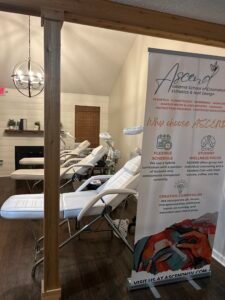
The transition of Lemon Sage Day Spa into an Advanced Clinical Training Spa represents growth for me — but also gratitude. It’s an opportunity to create a space where learning and real-world experience happen side by side. Over the years, I’ve learned so much through hands-on practice, and this shift allows me to pass that knowledge on in a more intentional way. It’s about slowing down, mentoring closely, and helping emerging professionals build both skill and confidence. Professionally, it feels less like a reinvention and more like a natural next step — one that allows me to serve not only our clients, but also the next generation of providers. It’s a responsibility I don’t take lightly, and I’m grateful to be in a position to serve our students and community.
How does advanced clinical training differ from traditional spa services in your experience?
At Lemon Sage Day Spa, our focus is simple: we are here to solve problems and empower clients with knowledge. Every treatment is designed to address immediate concerns while supporting long-term skin health. Education is a core part of our approach, because what clients do at home plays a vital role in maintaining their results.
What do you believe students need most when entering the esthetics field today?
When entering the esthetics field today, students need two things above all: confidence and ethics. Believing in yourself and committing to treating others the way you’d want to be treated lays the foundation for everything else. Building strong relationships — with both coworkers and clients — is just as important as mastering technique. You can have flawless skills, but without the ability to connect and treat people well, your growth will always be limited. True success in this field comes from combining expertise with integrity and care.
What gaps do you currently see in esthetics education — particularly when it comes to treating melanated skin?
The biggest gap I see is not enough content online and/or the textbooks teaching the biology of melanin, emphasizing individualized consultations, and showing students how to adjust techniques safely. When Estheticians understand the science and see results, fear is replaced with competence — and every client receives the care they deserve.
How important is structured supervision and mentorship in developing confident and competent professionals?
Structured supervision and mentorship are more important than ever — especially in an age of YouTube tutorials and TikTok “Academy.” It’s easy for students to watch one video and think they’ve mastered a technique, but real confidence comes from guided practice and expert feedback. I always remind my students: when in doubt, fall back on your scientific knowledge and textbook theory. The tricks and trends online are fun, but understanding the why behind every step is what builds competence, prevents mistakes, and turns good Estheticians into great ones. Mentorship is the safety net — and sometimes the reality check — that ensures skill grows alongside confidence.
What does National Black Estheticians’ Week mean to you personally?
National Black Estheticians’ Week is about celebrating talent, resilience, and representation in our industry. Personally, it’s a reminder to honor those who paved the way, inspire the next generation, and continue empowering Black Estheticians to shape the future of skincare.
This year marks National Black Estheticians’ Week as “The Legacy Year.” When you hear the word legacy, what comes to mind for you as a Black esthetician?
When I hear the word “legacy” as a Black esthetician, I think about the impact we leave behind — not just in the industry, but in the lives we touch and the example we set. For me, it’s about building a foundation my two daughters can look up to, showing them that skill, integrity, and passion can open doors and create opportunities. Legacy is passing on knowledge, confidence, and pride to the next generation.
What impact do you hope this training expansion will have on your community and the beauty industry at large?
I hope it gives people the courage to pursue their dreams and make the decisions needed to transition into entrepreneurship or leadership roles that align with their deepest desires. I believe happiness and longevity go hand in hand, and through obtaining a license, esthetics students can experience true freedom — financial freedom, the freedom to create, or simply the freedom to exist fully in the industry and in the world. Ultimately, that’s what we’re striving for: to empower others to build the life and career they truly want.
What is your favorite part of being an Esthetician?
Everything about it! I love the little moments — like placing a warm towel on a client’s face and noticing the subtle change in their breathing. That’s my cue they’re truly relaxed. And if they start to snore? Well, I know I’ve definitely done my job! I also love seeing transformations beyond the skin. When a client comes in feeling self-conscious about excess hair or pigmentation, and over the course of treatments you notice a pep in their step or a lift in their posture — those are the moments that make this work so rewarding. It’s about more than skin; it’s about confidence, comfort, and helping someone feel like themselves again.
What does your own personal skincare routine look like right now?
Well, I love SkinScript products. I’m actually have oily skin. My favorite cleanser is the raspberry refining cleanser. I use Good Molecules exfoliating powder. I typically use SkinScript Light Aloe Moisturizer. I have eczema so sometimes I will switch it up and use a slightly creamier moisturizer or apply the Summer Fridays Jet Lag Mask Masque when I have a flare. Also, one of my favorite products is Estée Lauder’s Advanced Night cleansing balm. It’s an all-time fave!
What advice would you give to Estheticians who are considering expanding into education or mentorship?
My advice is to lean into your strengths, be patient with yourself, and remember that teaching is a different skill than performing treatments. As som…
How can people connect with you or learn more about your programs (website, Instagram, booking link, or social media)?
You can find us online at www.ascendhsv.com, @ascendbeautycollege on IG. You can also view our service menu for our student spa at lemonsagedayspa.com…
As this week of NBEW celebration comes to a close, the work around visibility and Skin of Color education does not. It continues with Estheticians such as Tierra Holley, and the Estheticians highlighted this week, in their treatment rooms, and within their specific communities. What is built here continues in real time.
Celebration is a moment.
Legacy is a practice.